
SOUND EFFECTS! by Wally Wood and Harvey Kurtzman
Perhaps owing to The Hourglass' origins as the Longbox Graveyard comic book blog, The Wisdom of Wally Wood is far away the most successful article published on this site. Acknowledging the will of the people -- and because you can never have too much Wally Wood -- here's a look at my favorite Wally Wood story:
SOUND EFFECTS!
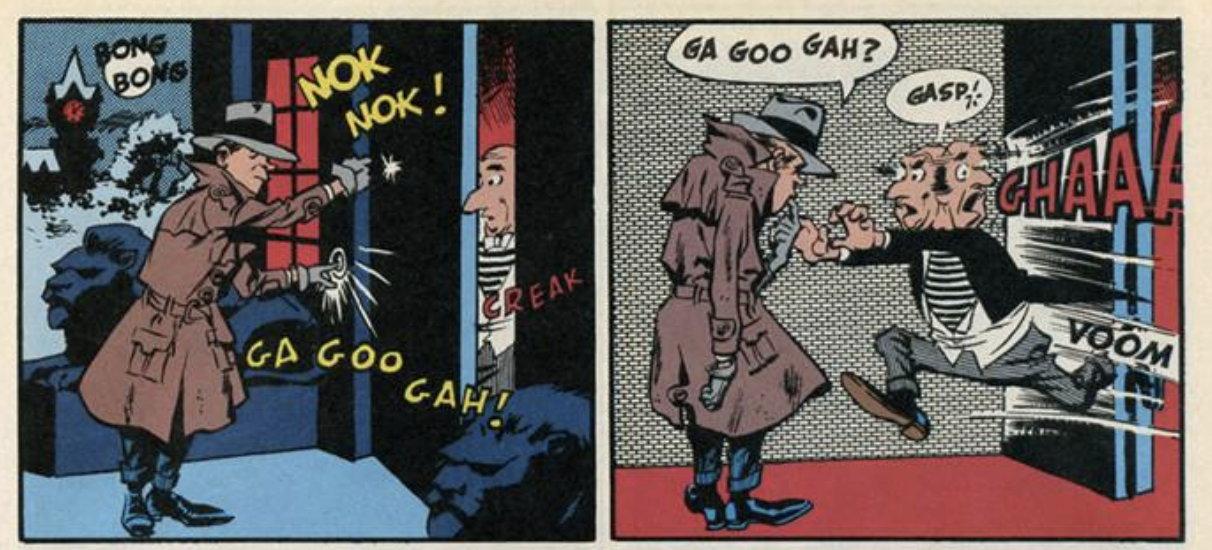
Written by Harvey Kurtzman, Wally Wood's “Sound Effects!” was published in February 1955 in MAD Magazine #20. In quixotic respect of copyright, I won't link to it directly here ... but there are plenty of sites around the web hosting this seven-page gimmick story in its entirety.
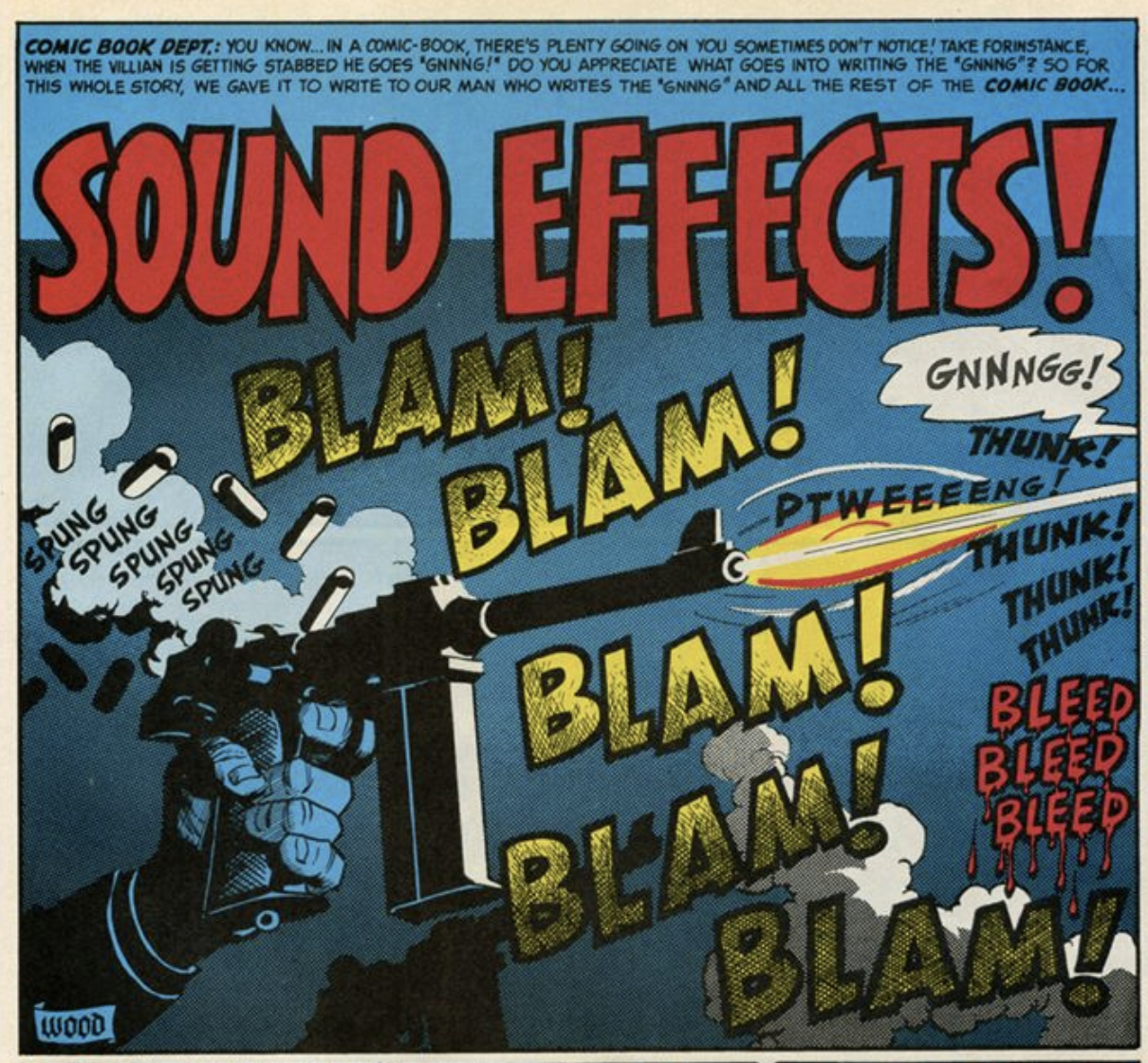
But is it really a gimmick story? Yes, in the sense that all MAD stories are gimmick stories ... but as is especially the case with the early EC Comics era of MAD, this is also a classic comics story in it's own right. The gimmick: a hardboiled private eye story is told almost entirely with "sound effects" -- those splashy text onomatopoeias that read like they sound.
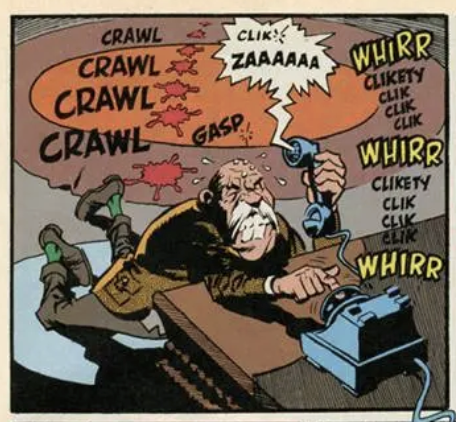
You get bog-standard comic book sound effects here, like BLAM! CRUNCH and BOOM, but you also see words used as effects for things that don't sound that way at all -- BLEED, CRAWL, BOUNCE. It's part of the gag, of course, but that our eye so readily accepts these out-of-bounds words as "legitimate" comic sound effects speaks to the unique nature of comics as an art form, where images and text blend together to create something that isn't entirely visual any more than it is a conventional written story.
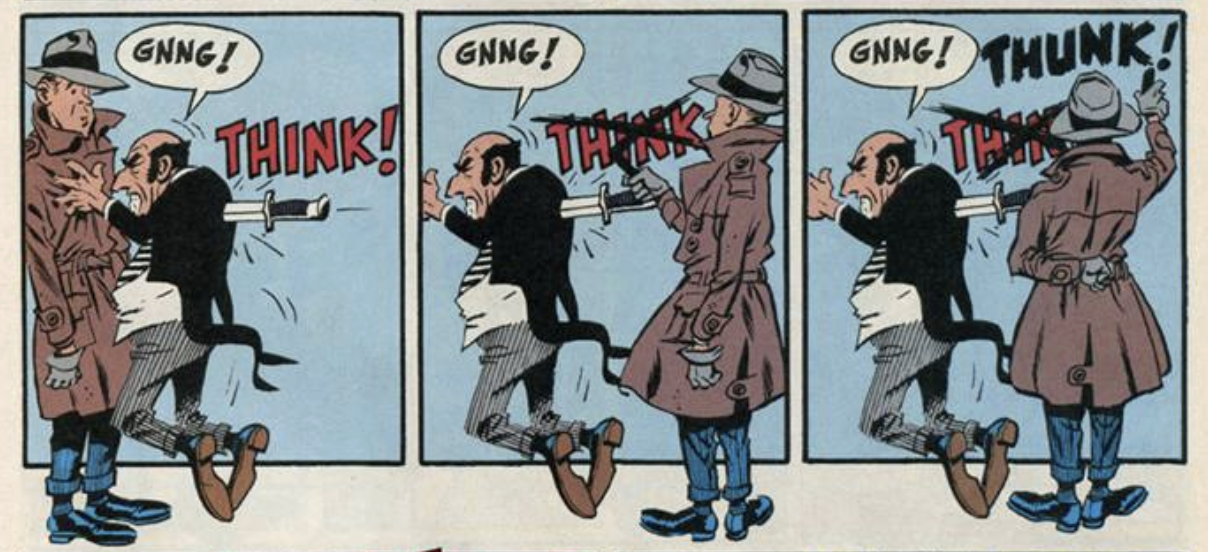
Where this supremely inventive story is most inventive is where it overtly breaks the visual grammar of comics, like when the detective crosses out and improves a sound effect that doesn't sound right ...
... and in the story's greatest sequence, where a woman's scream bends the laws of time and space to wind through panel borders and end up where it began, with the intangible sound arrested by the hands of our detective.
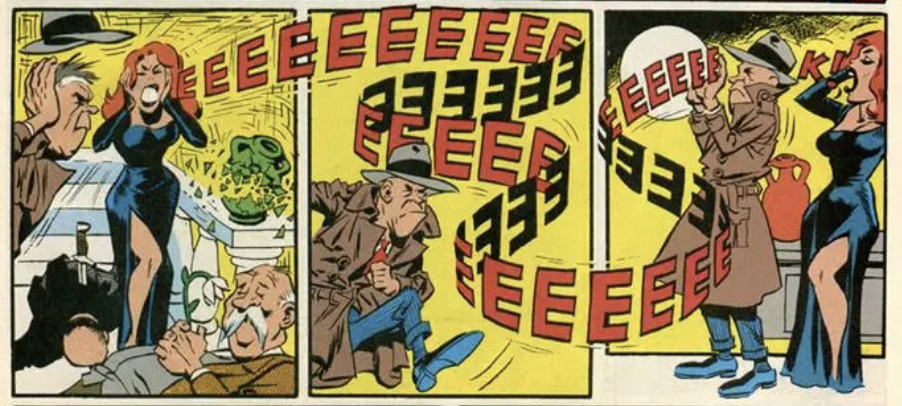
This is a playful delight, but it plunges into an existential realm when you consider Scott McCloud's observation, from Understanding Comics, of how the gutter -- the space between panels -- invites our brain to experience the passage of time and fill in the missing details between the images of a comics story. Here the sound effect begins inside the comics world, leaves that world, winds in front of and behind the space/time of that world, then crashes back into the story as a physical thing as much or more as a sound.
All of which is entirely too much thinking for a three-panel comics gag, but the more you look at this story, the more you will see.
(And it is fair to say, from a 21st century perspective, you may not like everything you see. Wally Wood gives us one of his vintage sexpots as a femme fatale, which is sexist but just a laugh. Less of a laugh is when the detective casually blackens his secretary's eye).
Insert-your-own opinion here about differing eras and changing mores. For my part, I prefer an era of comics storytelling where even a throw-away story contained so much artistry, craft, and mastery of the form.
I encourage you to seek out this little gem of comics genius. Reprints and archive editions of the original run of MAD have kind of a checkered history, but you can find them second-hand, here and there. Or you can Google up a peek of this story with a minimal understanding of search terms. I doubt the ghosts of Wood and Kurtzman will mind. And now that I think about it, "Google" is a word we might well have found inside a story like this.
"Ga Goo Gah?"
Close enough!